

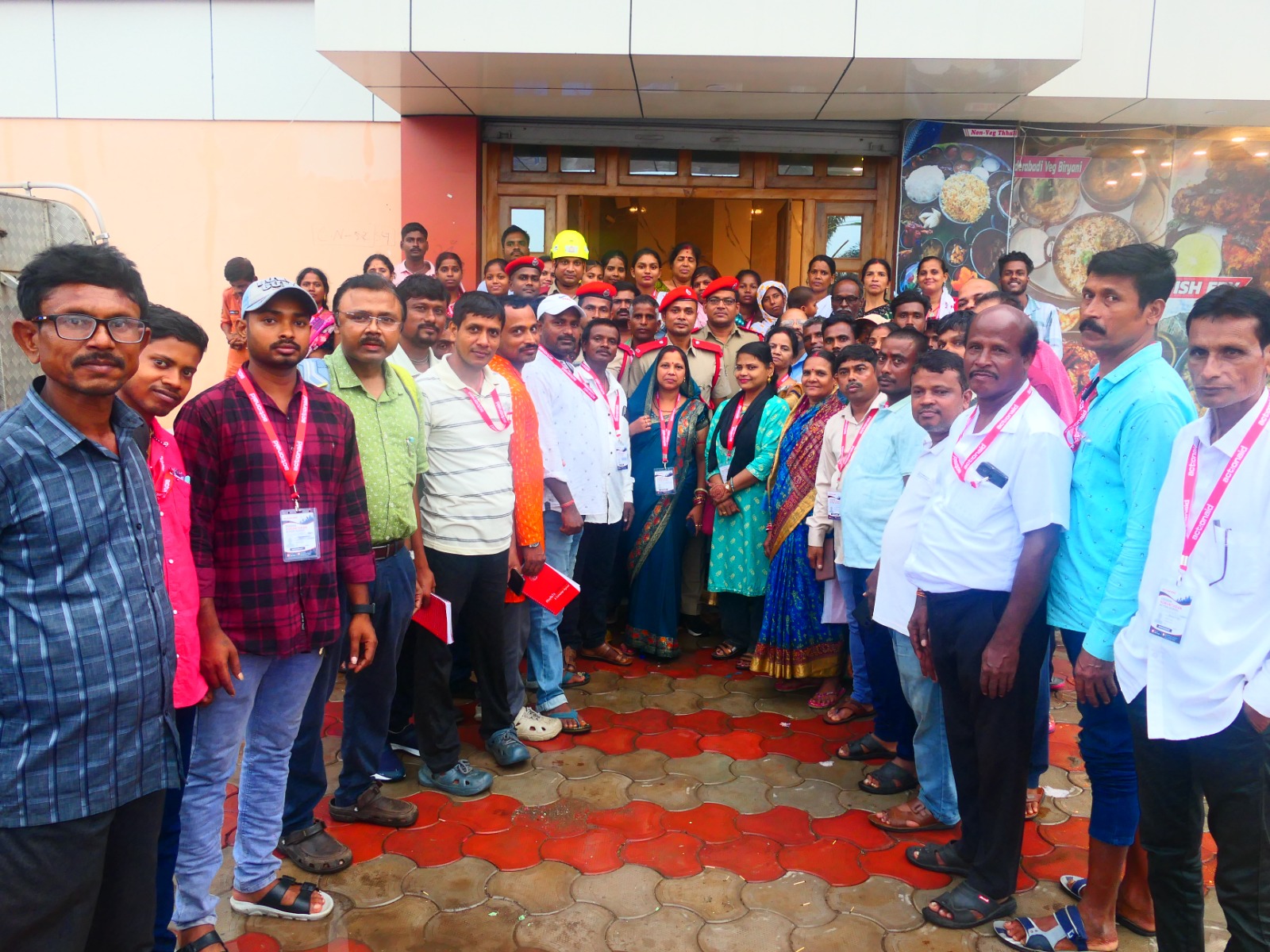
Bhadrak: The three-day Humanitarian School for First Responders commenced in Bhadrak with the participation of 120 community first responders from 30 disaster-affected villages across the district. The initiative, organised by ActionAid Association in collaboration with Odisha Vikalang Manch and local partners, aims to strengthen community preparedness and build a cadre of trained local responders capable of leading inclusive and accountable humanitarian action during disasters.
The inaugural sessions focused on understanding the evolving disaster landscape in Odisha and across India. Participants discussed the increasing frequency and intensity of cyclones, floods, heat waves and other climate-induced disasters, highlighting the urgent need for community-led preparedness and resilience. The opening session also explored the relevance and importance of the Humanitarian School as a platform for equipping community volunteers with practical knowledge and skills to respond effectively before, during and after disasters.
The discussions emphasised that communities themselves are the true first responders, often reaching affected families much before formal response mechanisms.
The technical sessions, moderated by Akshay from Odisha Vikalang Manch along with ActionAid colleagues Debabrat Patra, Suvendu kumar Ray and Sushri, helped participants deepen their understanding of the fundamental concepts of hazard, vulnerability and capacity. Through interactive exercises and practical examples from Odisha, participants examined how disasters disproportionately affect vulnerable communities, including women, children, older persons, persons with disabilities, informal workers and socially marginalised groups. A dedicated session facilitated by Amar Nayak further strengthened participants’ understanding of vulnerability by encouraging them to analyse the social, economic and environmental factors that increase disaster risks within their own villages.
One of the most engaging components was the group discussion, where participants shared their lived experiences of responding to cyclones, floods and other emergencies. They identified key challenges such as delayed communication, evacuation difficulties, inadequate access to relief, protection concerns for vulnerable groups and the need for stronger community coordination. These discussions reinforced the importance of local preparedness and collective action. The highlight of the day was a practical demonstration by the Bhandaripokhari Fire Department, which conducted hands-on sessions on fire safety, emergency evacuation procedures and basic disaster response techniques. Participants actively took part in the demonstrations, gaining practical knowledge on responding safely during fire incidents and other emergencies.
Speaking on the occasion, the organisers reiterated that strengthening local capacities is essential in an era of increasing climate-related disasters. By investing in community first responders, humanitarian response can become faster, more inclusive and more accountable to the needs of the most vulnerable.
Dr. Debaraja Panigrahi who provided input on first aid, search and rescue, protection, humanitarian standards, psychosocial support, simulation exercises and the development of village-level humanitarian action plans. Venkata Nayak from Action Aid Association encouraged the community first responders to share their experiences and collectively explore strategies for strengthening preparedness, resilience and inclusive response mechanisms at the village level. Lastly Participant certificates were distributed at the venue.