

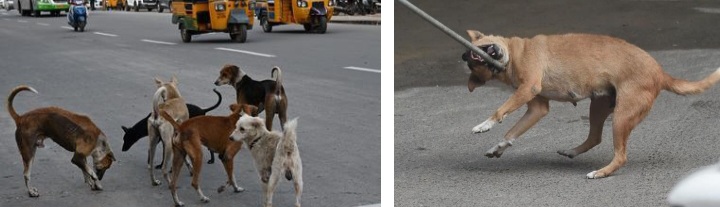
New Delhi(20/05/2026) By Subham Bose : Supreme Court Refuses to Recall Stray Dog Directives, Permits Euthanasia of Rabid Dogs The Supreme Court of India on Tuesday declined to recall its earlier directives aimed at removing stray dogs from public spaces, while also observing that dogs suffering from rabies may be euthanised in accordance with existing legal and medical guidelines.
The decision came during hearings related to growing concerns over stray dog attacks and public safety across several parts of the country.
A Bench of the apex court maintained that the right of citizens to move freely and safely in public areas cannot be compromised, even as it acknowledged the need for humane treatment of animals.
The court’s remarks have once again placed the spotlight on the ongoing debate between animal welfare activists and citizens demanding stricter measures to control the stray dog population.
During the proceedings, the Bench made it clear that dogs infected with rabies pose a serious public health threat and may be put down under legally sanctioned procedures.
The judges emphasized that rabid dogs cannot be allowed to endanger human lives, especially children, elderly citizens, and pedestrians using public roads and parks.
At the same time, the court refused to withdraw or dilute its previous observations directing authorities to ensure that stray dogs are not allowed to occupy public spaces in a manner that threatens safety or disrupts daily life.
The Bench noted that repeated incidents of dog bites and attacks have raised genuine concerns among residents in urban and rural areas alike.
The matter before the court involved petitions and applications seeking reconsideration of earlier directions issued in connection with stray dog management.
Animal rights groups had urged the court to adopt a more compassionate approach and argued that relocation or removal drives often lead to cruelty against animals.
However, the Bench stressed that compassion toward animals must coexist with responsibility toward human safety.
“Human lives must be protected,” the court observed, underlining that civic authorities have a duty to maintain secure public spaces.
India has witnessed an increase in public debate surrounding stray dog attacks in recent years.
Several states have reported rising cases of dog bites, including fatal incidents involving children.
According to health authorities, dog bites continue to be a major concern due to the risk of rabies, a viral disease that is almost always fatal once symptoms appear.
The court also referred to existing municipal and animal welfare regulations, which require local bodies to undertake sterilisation and vaccination programmes as part of stray dog population management.
The judges noted that poor implementation of these measures by civic authorities has contributed to the growing crisis.
Animal welfare organisations expressed disappointment over the court’s refusal to recall the directives.
Many activists argued that indiscriminate removal or hostility toward stray dogs could worsen the situation and violate protections granted under animal welfare laws.
They reiterated that sterilisation, vaccination, and community care remain the most effective long-term solutions.
On the other hand, residents’ associations and public safety advocates welcomed the court’s stand, saying authorities have often failed to respond adequately to complaints about aggressive stray dogs.
Several citizen groups have been demanding stricter enforcement measures after incidents involving attacks near schools, residential colonies, and marketplaces.
The issue has also generated political debate in multiple states, with local governments struggling to balance public safety concerns with animal rights obligations.
Municipal bodies frequently face criticism either for failing to control stray populations or for allegedly conducting inhumane drives against animals.
Legal experts noted that the Supreme Court’s observations reaffirm the principle that public health and safety are paramount while still recognising the importance of humane treatment under the law.
The ruling is expected to influence how state governments, municipal corporations, and animal welfare authorities frame future policies regarding stray dog management.
The court did not issue fresh nationwide guidelines but indicated that existing legal frameworks should be implemented more effectively.
It urged authorities to act responsibly and ensure that vaccination, sterilisation, and monitoring programmes are carried out systematically.
As the debate continues, the judgment reflects the difficult balance India faces between protecting animal welfare and ensuring the safety of millions of citizens who share public spaces with growing stray dog populations.