

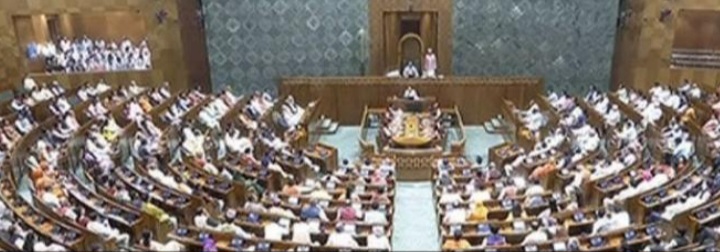
New Delhi (By Princyrani Sahu):
The Monsoon Session of Parliament will be held from July 20 to August 13, 2026, with a
total of 19 sittings. The session will convene after President Droupadi Murmu approved the
government’s recommendation to summon both the Lok Sabha and the Rajya Sabha.
The nearly four-week session is expected to witness extensive legislative business along
with sharp exchanges between the ruling National Democratic Alliance (NDA) and the
Opposition over a range of political and economic issues.
According to official sources, the government is likely to push several key legislative
measures during the session. Among the most significant is the proposed Constitution
(130th Amendment) Bill, which seeks to provide for the automatic removal of holders of
public office—including Ministers, Chief Ministers and the prime minister—if they
remain in judicial custody for 30 consecutive days.
The Joint Parliamentary Committee
(JPC) examining the bill is expected to finalise its report on July 17, just days before the
session begins.
Other major items expected on the legislative agenda include measures related to the
implementation of women’s reservation and delimitation, as well as amendments to the
Foreign Contribution (Regulation) Act (FCRA).
The upcoming session is also expected to be politically charged, with the Opposition
preparing to mount pressure on the government over issues such as inflation,
unemployment and agrarian distress. The controversy surrounding alleged irregularities
in the NEET examination is likely to feature prominently in parliamentary discussions.
In addition, the Opposition is expected to raise privilege motions against Defence
Minister Rajnath Singh, while recent national political controversies and evolving alignments within opposition parties are likely to shape the strategy and tenor of
debates on the floor of both Houses.
With several contentious issues and major bills on the table, the Monsoon Session is
expected to be a crucial test of the government’s legislative agenda as well as the
Opposition’s ability to corner the treasury benches on key national concerns.