

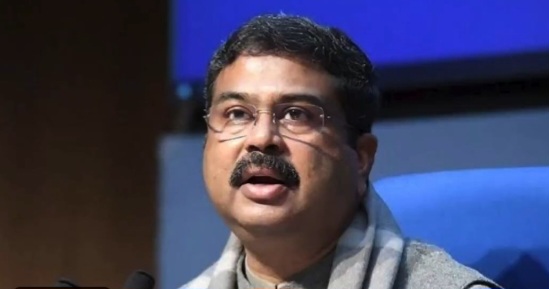
New Delhi: Union Education Minister Dharmendra Pradhan on Saturday resigned from the Union Council of Ministers amid nationwide protests over the alleged irregularities in the NEET-UG 2026 examination.
In a letter addressed to the country’s youth, Pradhan said he had submitted his resignation to Prime Minister Narendra Modi in view of the ongoing protests at Jantar Mantar in New Delhi and other parts of the country.
Expressing his commitment to education, Pradhan stated that he had devoted more than four decades to students, teachers, and educational reforms. He thanked the Prime Minister for giving him the opportunity to serve the nation and reaffirmed his faith in building a strong and inclusive education system.
Explaining the reason behind his decision, Pradhan said his resignation was aimed at preventing anti-national elements from exploiting the situation, preserving national unity, and ensuring that students’ futures are not affected by prolonged legal disputes. He urged students to remain focused on their studies and career goals.
Referring to the NEET-UG 2026 controversy, Pradhan said the Central Government acted swiftly after allegations of irregularities emerged. According to him, the investigation was handed over to the Central Bureau of Investigation (CBI), the examination was cancelled, a fresh examination was announced, and it was decided that NEET would be conducted in Computer-Based Test (CBT) mode from next year.
He also claimed that despite the government’s efforts to protect deserving students, some individuals had attempted to mislead students and create confusion during the controversy.
Pradhan said he had accepted responsibility from the beginning and remained committed to ensuring that honest and meritorious students did not suffer because of examination-related malpractice. He added that although the recent developments had saddened him, his primary concern remained the future of India’s youth.
The NEET-UG controversy has triggered widespread protests across the country, with students demanding greater transparency, accountability, and reforms in the examination process.