

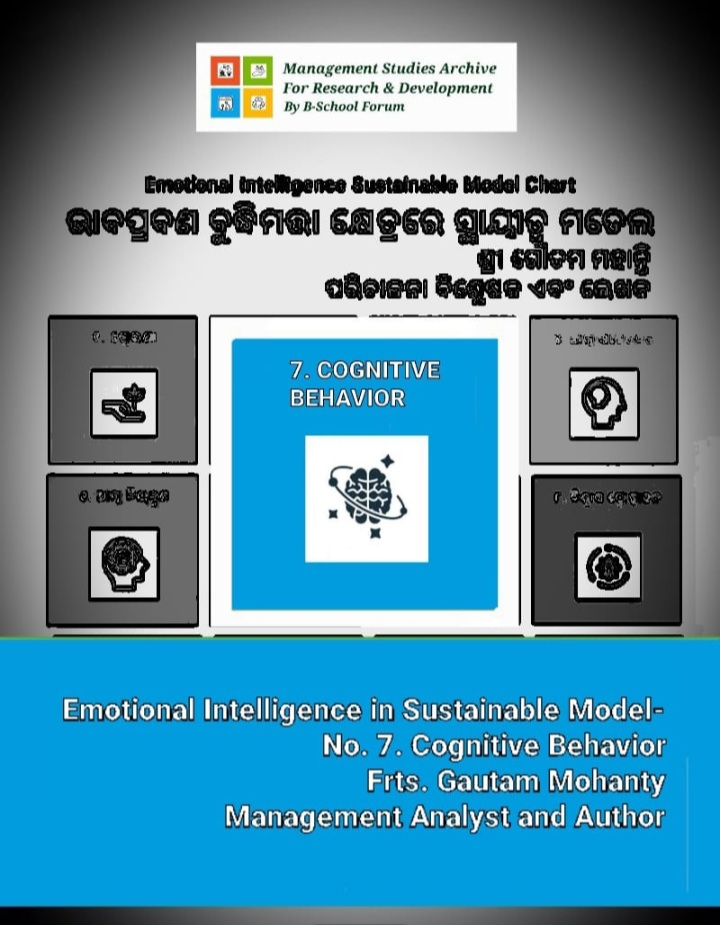
Bhubaneswar : Cognitive behavioral therapy (CBT) is a structured, goal-oriented form of psychotherapy. It operates on the principle that your thoughts, feelings, and behaviors are interconnected, meaning that by identifying and challenging negative or distorted thought patterns, you can actively change how you feel and act.
CBT is practical and focuses on your current, day-to-day challenges rather than exploring past traumas. Key principles and practices include:
The “CBT Triangle”: Understanding how a situation triggers a thought, which then creates a feeling and a resulting behavior.
Cognitive Restructuring: Learning to recognize thinking distortions (like catastrophizing or mind reading) and reframing them into more rational perspectives.
Behavioral Activation: Changing what you do—such as facing avoided fears or increasing positive activities—to positively influence your emotional state.
Skill Building: Completing in-session exercises and outside “homework” to build lifelong coping mechanisms, making you your own therapist.
Cognitive intelligence (often measured as IQ) is your ability to learn, reason, think logically, and solve problems. In contrast, emotional intelligence (EQ) is the capacity to identify, understand, manage, and navigate emotions in yourself and others. While cognitive intelligence dictates how well you process information, emotional intelligence dictates how well you manage relationships and stress.
Core Differences
Focus: Cognitive intelligence (IQ) focuses on analytical thinking, memory, and abstract reasoning. Emotional intelligence (EQ) focuses on empathy, self-awareness, self-regulation, and social skills.
Origin and Adaptability: Cognitive abilities generally stabilize after adolescence and are heavily influenced by genetics. Emotional intelligence, however, is flexible and can be actively developed and improved throughout your life.
Measurement: Cognitive intelligence is quantified via standardized tests (e.g., WAIS). Emotional intelligence is evaluated through behavioral observations, situational judgment tests, and self-report inventories.
Why Both Matter
Achieving lasting success usually requires a balance of both. A high IQ may help you secure a complex job or excel in technical skills, but a high EQ is often the primary predictor of leadership success, effective teamwork, and conflict resolution.
Courtesy: NATIONAL EDUCATION BOARD FOR MANAGEMENT TRAINING,
Vocational Skill Tennary
By B-School Forum Knowledge Centre.
Frts. Gautam Mohanty Management Analyst and Author, Bhubaneswar.