

Bhubaneswar : Odisha Cabinet meeting chaired by Chief Minister Mohan Charan Majhi has approved the implementation of the flagship scheme “Odisha Shikshanet – Empowering Students through a Free Wi-Fi Internet Facility to all Colleges and Universities” with a total outlay of Rs. 393.62 crore over a period of three years (FY 2026-27 to FY 2028-29).
The scheme will extend free, secure and high-speed Wi-Fi connectivity to 601 government and aided colleges across Odisha, building upon the successful Phase-I implementation in 130 colleges. Every authenticated student will receive up to 1 GB of free internet data per day within the campus for academic, research and skill development purposes.
The project includes installation of Wi-Fi infrastructure, bandwidth provisioning, network management, cybersecurity, and operation & maintenance support. A centralized monitoring dashboard will ensure efficient service delivery, network security, uptime and optimal utilization.
The facility will support access to e-books, digital libraries, virtual classrooms, SWAYAM and other MOOCs, research databases, competitive examination resources, digital skill development platforms and e-governance services such as SAMS, HIMS and Scholarship portals.
The initiative is expected to benefit over 6 lakh students and faculty members across government and aided Higher Education Institutions, particularly students from rural, remote and economically weaker sections, by bridging the digital divide and promoting equitable access to quality higher education.
Aligned with the National Education Policy (NEP) 2020, Digital India, SDGs 4, 9 & 10, and Odisha Vision 2036, the scheme will strengthen Odisha’s
digital higher education ecosystem and contribute towards building a Viksit Odisha and Viksit Bharat.
The Government of Odisha has put in place a comprehensive, farmer-centric and technology-driven Food and Paddy Procurement Policy for KMS 2026-27, aimed at transparent procurement at MSP, timely payment, efficient milling and uninterrupted supply of rice under PDS and welfare schemes.
The policy seeks to ensure that every eligible farmer gets a fair opportunity to sell marketable surplus paddy at MSP, receives payment promptly, and benefits from a procurement system that is digital, transparent, efficient, and accountable. At the same time, Odisha will continue to meet its requirements under NFSA, SFSS and other welfare schemes, with surplus rice being delivered to FCI for the Central Pool.
Formulating of OPDS (Control) Order, 2016, as derived from NFSA Act, 2013 has been issued for better management of Public Distribution System (PDS). All procedures related to public distribution system in the state are implemented as per the Odisha Public Distribution System (Control) Order, 2016.
Currently, the network of public distribution system (PDS) is being managed by 11,706 numbers of Fair Price Shops. Out of which 4963 are Private Dealers, 4026 FPS run by Gram Panchayats, 2256 run by Women Self Help Groups, 191 run by Self Help Groups, 242 runs by Cooperatives and 28 run by other organizations.
As the existing amendment order is valid till 30th September 2026 and there is a possibility of disruption of the Public Distribution System (PDS), in evicting all private dealers at once, it is considered necessary for revision of Clause 4(6) of the Odisha Public Distribution System (Control) Order, 2016. Accordingly, the Clause 4(6) of OPDS (Control) Order, 2016 is amended and the process of replacing institutional dealers in place of private dealers has been extended to 30.09.2027. The proposal has got the approval of the Cabinet.
In a major step towards strengthening irrigation infrastructure and transforming agriculture in rain-dependent areas, the Government of Odisha has approved the financial bid for seven Maga Lift Irrigation Schemes under Cluster XXVIII of the Parbati Giri Mega Lift Irrigation Project in Nuapada district. The initiative will bring assured irrigation within reach of thousands of farmers, reduce dependence on rainfall and create new opportunities for agricultural growth.
The seven schemes Boden, Borigaon, Khairmal, Lasunpali, Gandabahali, Chaura and Konabira-will create an additional planned irrigation potential of 8,800 hectares across 59 villages in Boden, Sinapali and Komna blocks. Drawing water from the Udanti River and Lower Indra Reservoir, the schemes will extend irrigation to upland agricultural areas that are difficult to serve through conventional gravity-based systems.
Today, the State Cabinet approved the tender for the work with an execution cost of ₹268.22 crore and an additional ₹21.46 crore earmarked for 15 years of operation and maintenance. Fully funded by the State Government, the schemes are scheduled for implementation over 36 months, with long-term maintenance provisions to support reliable and sustainable operation.
The seven schemes will introduce modern, pressurised irrigation systems with underground pipelines delivering water up to the one-hectare chak level. By reducing water losses and facilitating micro-irrigation, the initiative will promote efficient water use, greater irrigation security, improved crop productivity and opportunities for crop diversification, particularly during the kharif season.
With these seven schemes, Odisha is advancing towards more efficient, reliable and sustainable irrigation, bringing water closer to farmers and strengthening the resilience of its agricultural economy.
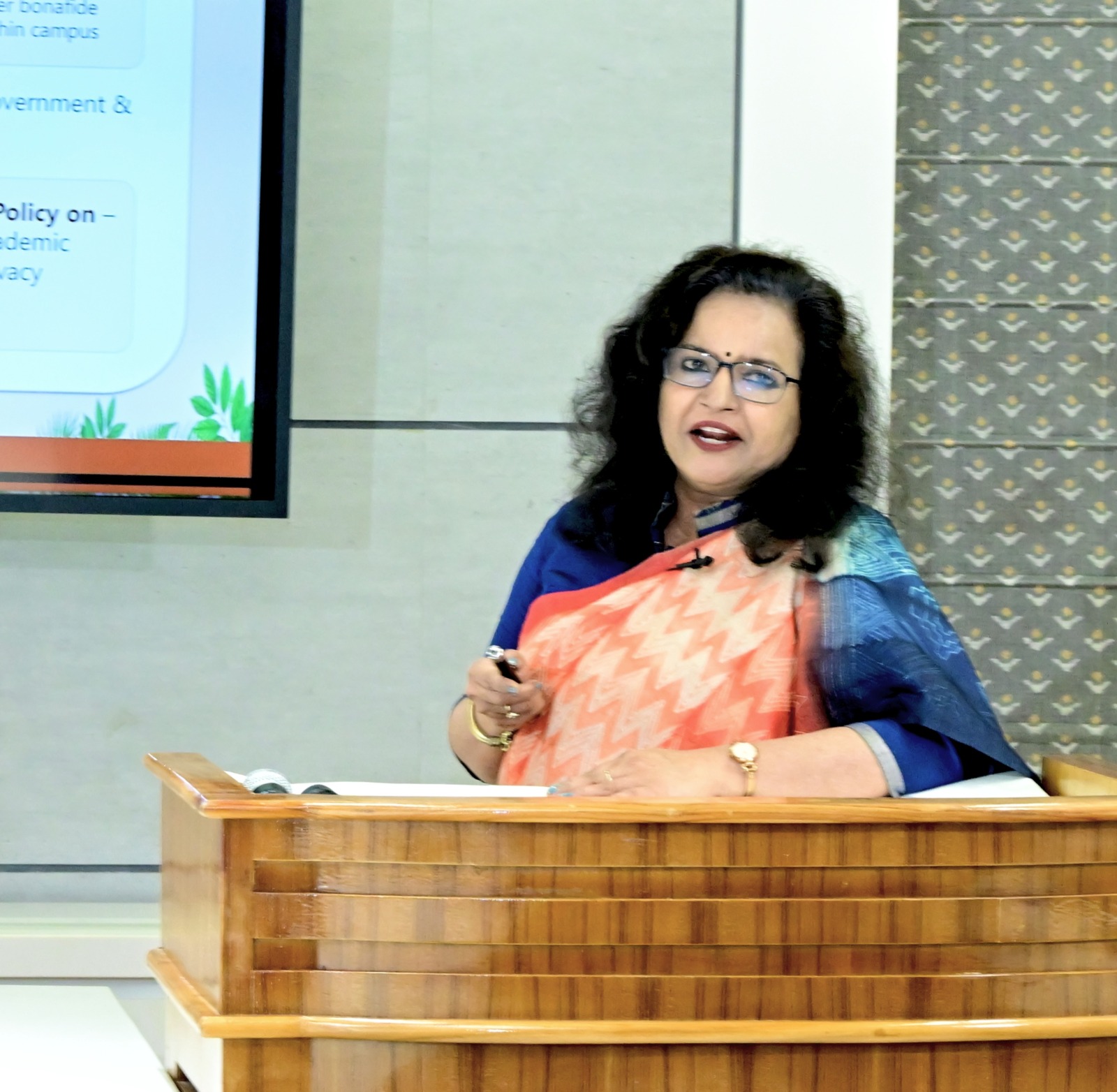
The press briefing regarding the Cabinet decisions was done by Chief Secretary Anu Garg.