

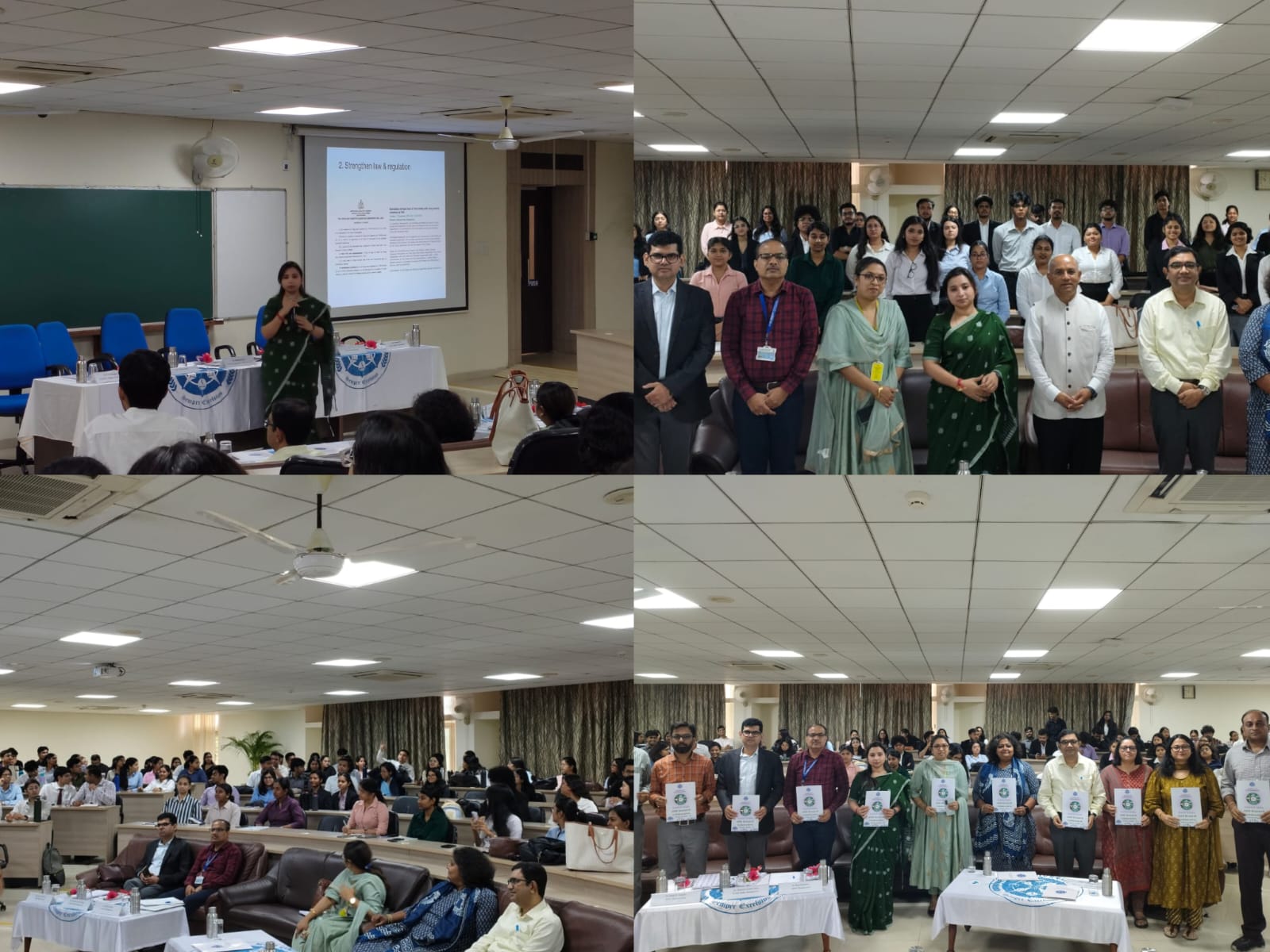
Bhubaneswar : Experts sounded the alarm on the escalating global threat of Antimicrobial Resistance (AMR) at a pivotal seminar hosted by XIM University on Friday.
Titled “Antimicrobial Resistance: Beyond the Laboratory Integrating Science, Community, Policy through One Health,” the most significant milestone of the summit was the strategic launch of the “Odisha Network of AMR,” a groundbreaking interdisciplinary initiative designed to track and mitigate superbugs across the region aggressively.
Convened by Dr. Aradhana Basu of the School of Sustainability at XIM University, the inaugural session welcomed university dignitaries, including Vice Chancellor Fr. K.S. Casimir, S.J., and Pro-Vice Chancellor Dr. Subhajyoti Ray, setting the stage for an urgent dialogue on regional health security.
Dr. Sweta Raghavan, Advisor on AMR to the Government of Karnataka, delivered the keynote address, characterizing AMR as a silent but devastating pandemic. She highlighted how constant environmental and clinical exposure to broad-spectrum drugs accelerates microbial mutation. Pointing to the economic and biological toll, Dr. Raghavan warned that AMR is projected to cause a global economic loss of $3.4 trillion by 2050, having already been associated with nearly 5 million deaths in 2019.
The seminar extensively covered the “One Health” paradigm, which links human, animal, and environmental ecosystems, drawing on insights from Dr. Bijayni Behera of AIIMS Bhubaneswar. She noted that the animal sector accounts for the highest global consumption of antibiotics, which are often used as growth promoters. Highlighting the hidden nature of the crisis, she revealed that surveillance testing indicates 90% to 95% of the healthy Indian population are already gut carriers of AMR bacteria.
Tracing the evolutionary origins of resistance, Dr. Mahesh Chandra Sahu of ICMR-RMRC warned of a rapid decline in the efficacy of modern medicine due to empirical prescribing and self-medication. With global resistance to toxic, last-resort drugs like colistin now reaching up to 29%, he strongly advocated for compulsory culture sensitivity testing and international regulatory partnerships.
Addressing environmental vectors, Dr. Suraj Kumar Tripathy from KIIT Bhubaneswar highlighted critical flaws in conventional municipal wastewater treatment that inadvertently foster the growth of superbugs. As a scalable countermeasure, he presented a light-based photo-thermal technology developed in collaboration with the Karolinska Institutet. This decentralized, solar-powered innovation dismantles bacterial cell walls without heavy chemical use, offering a low-cost barrier against waterborne AMR for resource-limited regions.
To combat this mounting regional crisis, Dr. Basu and her team formally announced the launch of the Odisha Network of AMR, framing it as the central action plan and the primary outcome of the seminar. By bridging XIM University’s School of Sustainability, School of Governance and Public Affairs, and School of Communication, this dedicated network aims to centralize critical data and directly translate laboratory findings into tangible community action, robust public policy, and localized solutions.
The seminar successfully established that mitigating the AMR crisis requires urgent, cross-sector integration extending far beyond clinical settings. This critical mission will now be actively driven across the region by the Odisha Network of AMR.
The event concluded with a vote of thanks from Dr. Basu, cementing XIM University’s commitment to pioneering collaborative solutions for global health security through the ongoing, interdisciplinary efforts of this newly established network.