
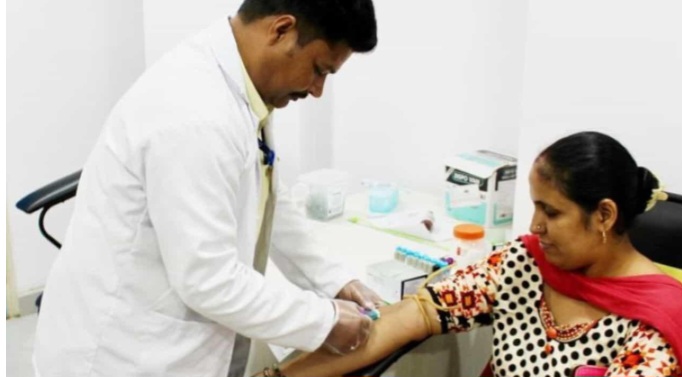
No free diagnostic services for women with more than three children: Assam hospital
Guwahati(23/06/2026) By Subham Bose : A government hospital in Assam has come under the spotlight after introducing a policy that denies free diagnostic services to women who have more than three children.The move, reportedly aimed at supporting the state's population stabilisation efforts, has triggered widespread debate over public healthcare access, reproductive rights, and the balance between welfare policies and demographic objectives.Under the new directive, women with more than three children will no longer be eligible for complimentary diagnostic tests that are otherwise provided free of cost at the hospital.Hospital authorities have maintained that the decision is in line with the broader policy initiatives of the Assam government, which has repeatedly advocated population control measures as part of its development agenda.Officials said the measure is intended to encourage smaller families while ensuring that limited public healthcare resources are utilised more effectively.According to the hospital administration, the restriction applies only to certain free diagnostic services and does not affect emergency medical treatment or other essential healthcare facilities provided to patients.The announcement has, however, drawn mixed reactions from medical professionals, public health experts, and civil society groups.Critics argue that access to diagnostic services is a fundamental component of healthcare and should not be linked to the number of children a woman has.They contend that denying preventive or diagnostic care could adversely affect maternal health, particularly among economically weaker sections who rely heavily on government hospitals for affordable medical services.Health experts have also pointed out that decisions regarding family size are influenced by multiple social, economic, educational, and cultural factors.They caution that limiting healthcare benefits may disproportionately impact women, who often bear the primary responsibility for reproductive health while having limited control over family planning decisions in many households.Supporters of the policy, however, believe that governments are justified in introducing incentive-based or disincentive-based measures to promote population stabilisation.They argue that states with finite healthcare and welfare resources must encourage responsible family planning to ensure sustainable development and improve the quality of public services.The Assam government has, in recent years, consistently emphasised population stabilisation as a key component of its governance strategy.It has previously proposed or implemented measures linking eligibility for certain government benefits and public sector opportunities to family size.State leaders have argued that controlling population growth is essential for improving education, healthcare, employment opportunities, and overall socio-economic development.Public health specialists, however, stress that international experience generally favours voluntary family planning, awareness campaigns, women's education, improved access to contraception, and maternal healthcare over restrictive measures.They note that empowering women through education and healthcare has historically proven to be one of the most effective ways of reducing fertility rates in a sustainable and equitable manner.Legal experts have also observed that while state governments have the authority to frame administrative policies, any restriction affecting access to public healthcare may be subject to scrutiny if challenged on constitutional or human rights grounds.Whether the hospital's decision conforms to existing government guidelines and legal standards may become clearer if the matter is examined by higher authorities or the courts.The development has generated significant discussion on social media, with opinions sharply divided.While some users have welcomed the move as a necessary step towards encouraging smaller families, others have criticised it as discriminatory, arguing that healthcare should remain universally accessible irrespective of family size.As the debate continues, the hospital's policy has once again brought the complex issue of population control into the national conversation.It underscores the challenges governments face in balancing demographic objectives with the need to ensure equitable access to essential public services, particularly healthcare.The controversy is also likely to intensify discussions on how best to achieve population stabilisation without compromising the principles of inclusive and accessible healthcare for all citizens.
Trending

7.5-magnitude quake strikes Venezuela seconds after Foreshock

Government reiterates Ethanol Blending Programme is scientifically validated and continuously monitored

Cabinet reshuffle buzz grows after George Kurian's exit; major changes in Modi Government expected soon

Ministry of Mines auctions 10 critical mineral blocks under 7th tranche

Odisha strengthens Kharif 2026 preparedness following review by Union Agriculture Minister
Visit Our Odia News Site