

Bhubaneswar: Using Odisha’s iconic Boita Bandana festival as an opportunity for rural economic activity and livelihood generation, the Odisha Rural Development and Marketing Society (ORMAS), under the Department of Panchayati Raj and Drinking Water, has facilitated new market linkages for farmers and women Self-Help Groups (SHGs). By connecting the cultural significance of the festival with the economic empowerment of rural communities, ORMAS has developed an innovative livelihood model that promotes the use of eco-friendly materials in traditional boat-making while encouraging rural enterprises.
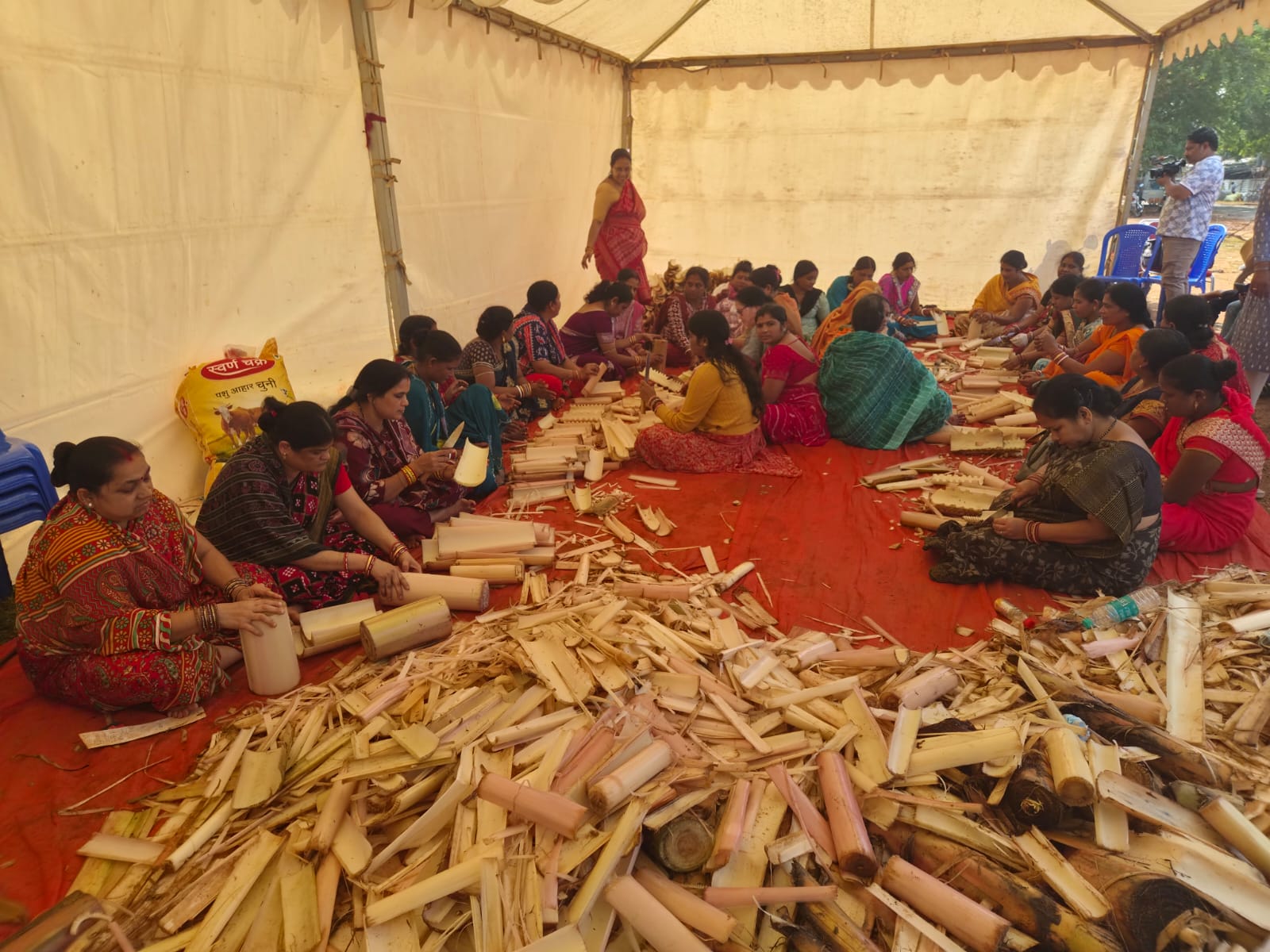
For this year’s Boita Bandana celebrations, 21,000 eco-friendly boats made from banana stems have been prepared. The initiative has engaged 40–50 women members from 4–5 SHGs in the boat-making activity. An estimated remuneration of ₹90,000 has been earmarked for their work. This has created an additional festival-linked income opportunity for rural women while encouraging their economic self-reliance.
The initiative has also opened up an additional income avenue for banana farmers. Through Cropify Farmers Producer Company Ltd. in Angul district, 350–400 Kandi of bananas have been marketed, with an estimated revenue of up to ₹1.40 lakh. In addition, banana stems that were previously left unused and discarded after the harvesting of 750 banana trees have been put to productive use. Farmers have earned an additional ₹7,500 through the supply of these stems. The banana stems collected from Angul have been supplied to Kataka, where they have been used to prepare eco-friendly boats for the Boita Bandana festival.
Hon’ble Minister for Rural Development, Panchayati Raj and Drinking Water, Shri Rabi Narayan Naik, said, “Our festivals are not just a reflection of our cultural traditions; they can also serve as a means of strengthening the rural economy. ORMAS’s initiative to connect our glorious tradition of Boita Bandana with rural enterprises and the economic empowerment of women is certainly commendable.”
Dr. Monica Priyadarshini, Chief Executive Officer, ORMAS, said, “Through this initiative, local agricultural resources have been put to productive use while connecting farmers and women SHGs with a new market opportunity. ORMAS will continue to create market linkages and open up new livelihood avenues for rural producers through such innovative initiatives.”
The initiative demonstrates how cultural celebrations can generate economic opportunities beyond the festivities themselves. By linking festival demand with local agricultural resources and community-based enterprises, ORMAS is creating avenues for rural producers to participate in emerging markets while promoting resource utilisation and sustainable livelihood practices.